Recent News
 Connecting the Dots: Why Regional Alignment Matters for East Central IndianaCareers, READIOctober 27, 2026
 Wayne County Downtown Revitalization Grants Generate More Than $17 Million in Investment, With Second Round Now OpenREADIOctober 13, 2026
 Brookfield Farms Celebrates First Completed Home, Bringing New Housing Opportunities to Henry CountyREADISeptember 22, 2026
 Leaving a Mark: Gas City YMCA Celebrates Construction MilestoneREADISeptember 18, 2026
 Caitlin Hancock Brings East Central Indiana’s Regional Perspective to Statewide ConversationsAboutSeptember 16, 2026
Growth in Action
Connecting the Dots: Why Regional Alignment Matters for East Central Indiana
A community’s ability to grow depends on how well its opportunities connect. Employers need people with the right skills. Workers need access to training, housing, and reliable transportation. Families need communities where they can build a life.
Those needs cross county lines. Our planning should reflect that.
Governor Mike Braun’s recently announced workforce realignment moves Indiana toward closer coordination between workforce development and the state’s Regional Economic Acceleration and Development Initiative, better known as READI. For East Central Indiana, this creates an opportunity to connect investments in people with investments in the places they call home.
What is changing?
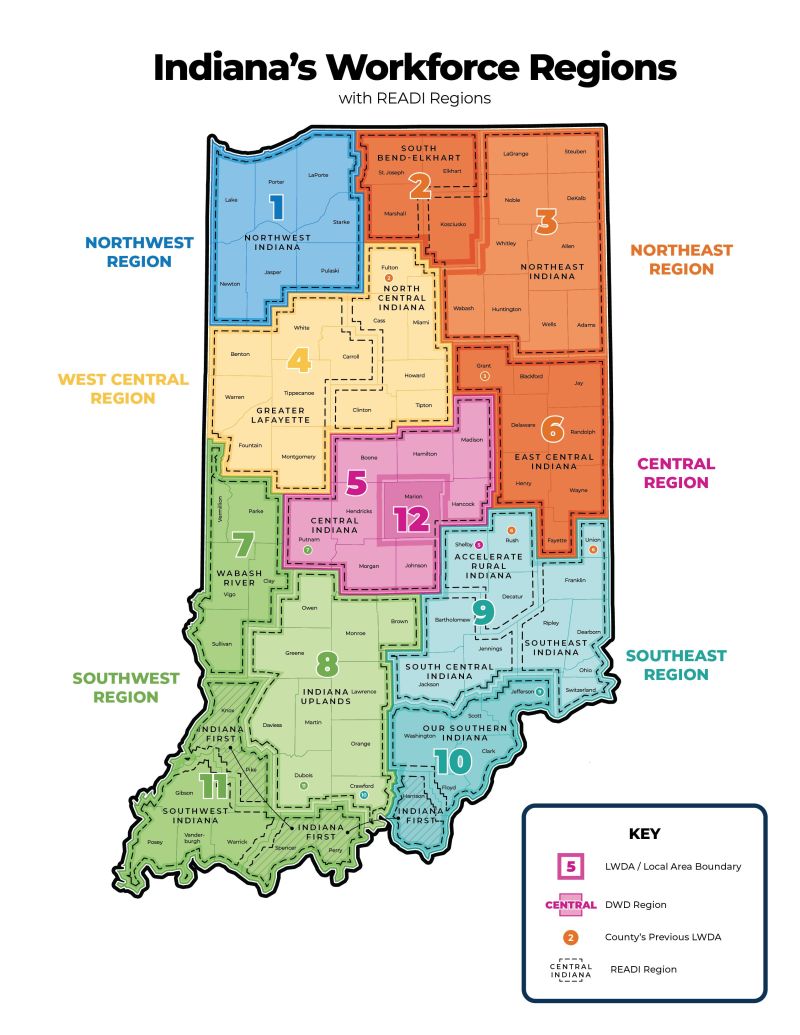
Indiana has confirmed a workforce structure that retains 12 local workforce development areas, with limited county adjustments, while bringing workforce and economic development into closer alignment with READI regions. The current implementation target is July 1, 2028.
This does not mean each of Indiana’s 15 READI regions will have its own workforce area. Instead, the structure groups READI regions within workforce areas and establishes shared planning relationships. The intent is to help workforce leaders and economic development partners coordinate strategies, resources, and services across a more consistent geography.
The practical value will come from what those partners can accomplish together.
What does a workforce development region actually do?
A workforce development region connects people looking for opportunity with employers looking for talent. It brings together businesses, educators, training providers, and community organizations to help residents prepare for available jobs and help employers build their workforce.
Here in eastern Indiana, that work is led by Alliance for Strategic Growth, Inc., doing business as Eastern Indiana Works. Its current service area includes Blackford, Delaware, Fayette, Henry, Jay, Randolph, Rush, Union, and Wayne counties. Eastern Indiana Works provides regional workforce leadership and connects education, training, and support services with local employment needs.
For residents, services include career coaching, education and training resources, connections to job opportunities, and access to community resources. Through its Direct Connect virtual platform, people can reach career coaches and explore employment and community resources across the nine-county service area.
For employers, Eastern Indiana Works offers recruitment assistance, hiring events, and on-the-job training opportunities. It also helps businesses develop customized apprenticeship programs and connects employers with students through college and career fairs. These services support immediate hiring needs while helping develop future talent.
These are practical services with direct implications for regional growth. Helping a resident prepare for a better-paying job can strengthen a household. Helping a business find skilled employees can support its ability to grow. Connecting students with local careers can help them see a future close to home.
Where workforce development and READI overlap
Workforce development and community development often address different parts of the same challenge.
A training program can prepare someone for a better-paying job. Whether that person can accept the opportunity may also depend on finding a home within reach of the workplace, securing childcare, or having dependable transportation. Likewise, a community investing in housing or downtown revitalization benefits from understanding where employers are growing and what workers need.
Workforce partners bring knowledge of hiring needs, skills gaps, and career pathways. READI partners bring regional strategies for population growth, housing, infrastructure, and quality of place. Closer alignment creates an opportunity to use that knowledge together.
For example, a regional strategy could connect training for a growing industry with housing development near employment centers and transportation planning that helps residents reach those jobs. Each investment serves a purpose on its own. Planning them together can make that purpose more achievable.
For Forge, that connection matters. Our work with communities reinforces how closely housing, land development, and economic opportunity are linked. A growth strategy becomes more useful when it considers both the jobs available and the conditions people need to live and work there.
Planning around how people actually live
People regularly cross county lines to work, attend school, shop, and access services. An employer in one county may depend on workers who live throughout the surrounding region.
When planning reflects those relationships, communities can better understand their shared opportunities. A housing investment in one community may support employment growth in another. A training partnership may serve businesses across several counties. Infrastructure improvements may expand access to both.
For East Central Indiana, this perspective encourages communities to recognize how their individual strengths contribute to regional success. It also gives local leaders a stronger basis for deciding where collaboration can make the greatest difference.
Turning shared priorities into action
The state identifies joint planning, coordinated funding opportunities, and stronger collaboration with READI partners as intended benefits of the realignment. For communities, the opportunity is to build a clearer connection between an identified need and a proposed investment. Partners who share priorities can better explain how a project supports employers, expands opportunity for residents, and contributes to regional goals.
Alignment alone will not guarantee those results. It will take continued collaboration among local governments, workforce boards, educators, employers, and community organizations to turn a shared framework into useful action. As implementation moves toward 2028, regional partners like Forge have time to strengthen those relationships and identify the priorities they should tackle together.
We see this as an opportunity to make community and economic development planning more connected. When investments in skills, housing, infrastructure, and quality of place support one another, East Central Indiana is better positioned to help people build their futures here.